Jobs for People Over 50 in Postal, Logistics, and Federal Roles
Why Workers Over 50 Still Have Strong Options
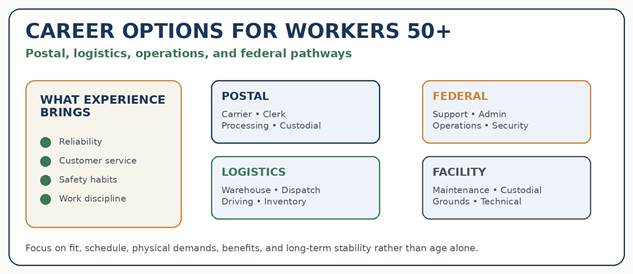
Many workers over 50 bring exactly what operational employers value: reliability, attendance, customer service, safety awareness, patience, and experience working under pressure. Postal, logistics, facility, transportation, and federal-support roles often reward consistency and practical work habits more than formal credentials alone.
The best role depends on physical ability, schedule needs, driving history, benefits, commute, and long-term goals. Some jobs are active and demanding, while others focus more on customer service, administration, maintenance, dispatch, or operations support.
Postal Jobs Can Be a Strong Second-Career Option
Postal work appeals to many experienced workers because it offers a large national network, defined job categories, structured pay systems, and career benefits for eligible employees. Openings may include carriers, clerks, mail handlers, custodians, maintenance workers, drivers, and processing employees.
Applicants looking for a broad range of USPS Jobs should compare career and noncareer appointments carefully. Career status often changes the benefit package, retirement participation, leave earning, and long-term job structure.
Which Postal Roles May Fit Workers Over 50?
|
Role Type |
Why It May Fit |
What to Consider |
|
Window or retail clerk |
Customer service, transactions, organized indoor work |
Standing, schedule flexibility, public interaction |
|
Mail processing clerk |
Routine systems, sorting, scanning, teamwork |
Shift work, standing, repetitive motion |
|
Custodial or maintenance |
Practical skills, facility work, clear tasks |
Physical activity, tools, local requirements |
|
Carrier roles |
Independent work, route discipline, outdoor activity |
Walking, lifting, weather, driving |
|
Mail handler |
Warehouse-style operations and teamwork |
Lifting, movement, night or weekend shifts |
Logistics Roles Often Value Experience Over Age
Warehouses, distribution centers, fleet operations, dispatch teams, and inventory departments need dependable employees who understand schedules, safety, deadlines, and accountability. Workers with backgrounds in retail, manufacturing, driving, customer service, office administration, or supervision often have transferable skills.
- Warehouse associate or material handler
- Inventory or stock-control clerk
- Dispatch or route coordinator
- Delivery driver or yard support
- Shipping and receiving clerk
- Facilities or maintenance support
- Customer service for transportation or logistics companies
Federal and Government-Related Roles Beyond Postal Work
Federal and public-sector employers also hire for administrative, operations, security-support, facilities, maintenance, customer-service, technical, and program-support roles. Some positions require specialized credentials, while others focus on experience, reliability, and the ability to follow procedures.
Applicants should review age-related requirements carefully because certain law-enforcement or public-safety occupations have maximum entry ages. Many civilian, administrative, support, facility, and operational roles do not use those same limits.
Physical Demands Matter More Than Age Alone
A job title can sound suitable but still involve heavy lifting, long periods of standing, frequent walking, stairs, outdoor weather, or irregular shifts. Read the physical requirements section before app and compare it with your current capability rather than re on assumptions.
For some applicants, an indoor clerk, dispatch, customer-service, or administrative role may offer a better long-term fit than a high-mileage delivery route or heavy warehouse position.
Location Matters
Availability varies sharply by city. A smaller market may have only a few openings, while a regional hub may have multiple delivery, processing, and support jobs at the same time. Expanding your search radius can improve your options if the commute remains practical.
You can review current Postal Jobs in Alexandria, Louisiana, and compare local openings with nearby markets before deciding which roles best match your schedule and experience.
Benefits and Stability to Compare
Workers over 50 often place more weight on health coverage, retirement, leave, predictable income, and job continuity. Those factors can be as important as the starting hourly rate.
- Health insurance eligibility and employee premiums
- Retirement participation and employer contributions
- Paid annual and sick leave
- Schedule stability and overtime expectations
- Job duration: temporary, noncareer, or career
- Opportunity to move into less physically demanding roles later
How to Position Your Experience in an Application
Do not downplay long work history. Translate it into current employer needs. Focus on attendance, safety, customer service, cash handling, route discipline, supervision, equipment use, documentation, inventory control, and problem solving.
- Use recent examples instead of listing every job from decades ago.
- Highlight reliability and low-error work.
- Show comfort with scanners, mobile apps, email, or basic workplace software.
- Explain transferable skills from retail, manufacturing, driving, hospitality, or office work.
- Keep the resume concise and tailored to the position.
External Career Reference
AARP's career resources provide practical guidance for experienced workers on job searching after 50, including resume updates, interview preparation, and age-bias considerations. Use the specific employer posting for final job requirements.
Frequently Asked Questions
Is 50 too old to start a USPS career?
No. Many postal roles do not have a general maximum hiring age. Applicants must meet the requirements listed for the specific job.
Which postal jobs are less physically demanding?
Retail clerk, some processing, administrative, and support roles may involve less walking than delivery jobs, but standing and shift work may still be required.
Do federal jobs have age limits?
Some law-enforcement and public-safety positions do. Many civilian, support, administrative, and facility roles do not use the same age limits.
Are part-time roles a good way to re-enter the workforce?
Yes. Part-time or noncareer positions can provide current experience and income, but applicants should compare benefits and long-term stability.
Should older applicants mention age on a resume?
No. A resume normally focuses on relevant experience, skills, and achievements rather than age or date of birth.
What matters most when choosing a role after 50?
Physical fit, schedule, benefits, commute, job duration, and long-term stability are often more important than title alone.
Final Takeaway
Workers over 50 have viable options across postal, logistics, facilities, transportation, and federal-support work. The strongest choice is the role that matches your experience, physical capacity, schedule needs, and benefit priorities. Focus on transferable skills and compare the full employment package before app.